Changes in time, space and social structures in Finland
The legacy of the great migration: when the connection to the land was broken
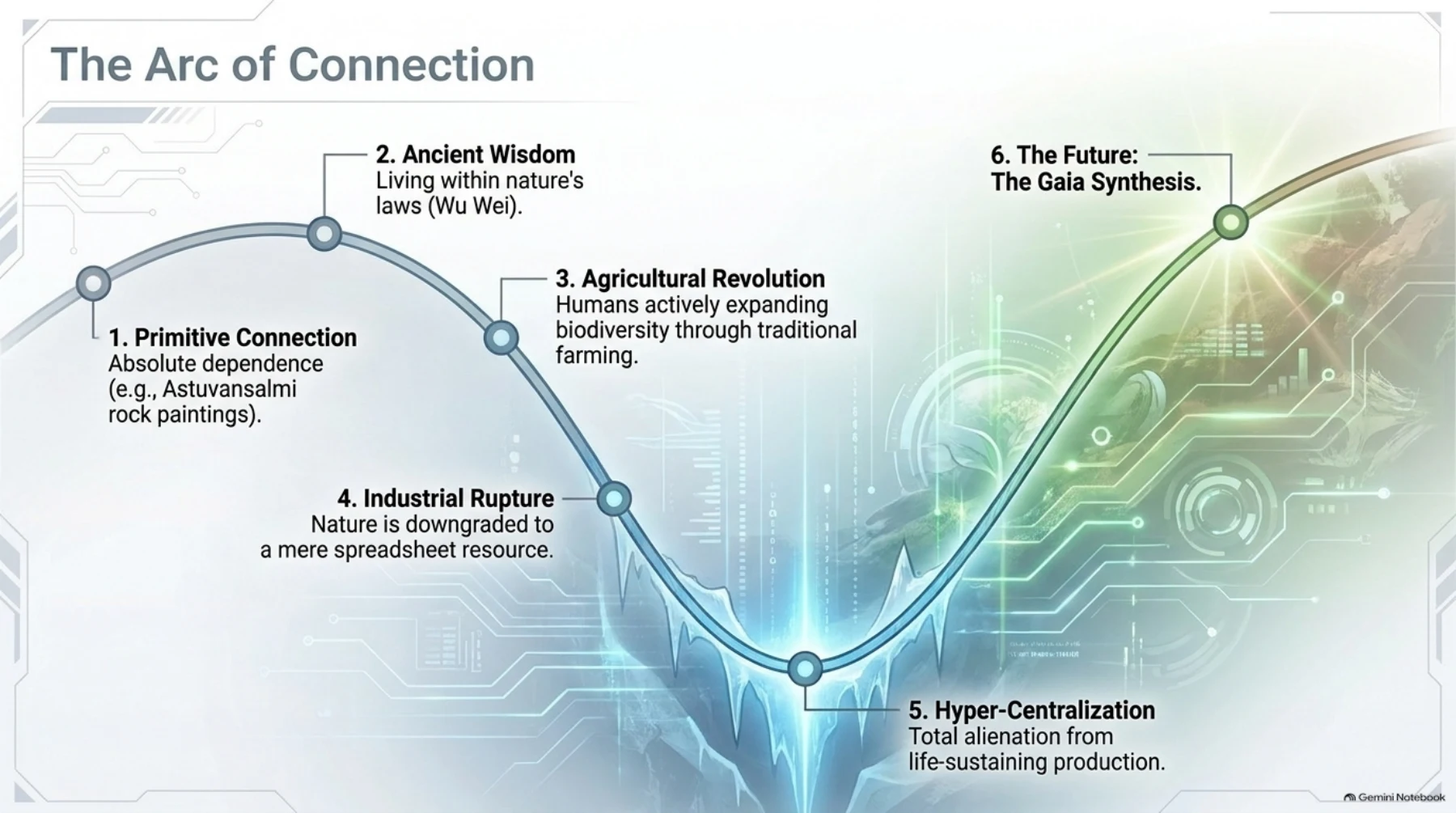
To find the historical turning point when Finnish society’s connection to the land began to fracture in earnest, we must return to the 1960s and 1970s. This period is aptly known in Finnish history as the Great Migration. Extensive mechanisation in agriculture and forestry sharply changed the relationship between humans and nature: living nature increasingly came to be viewed simply as a resource to exploit and a store of raw materials.
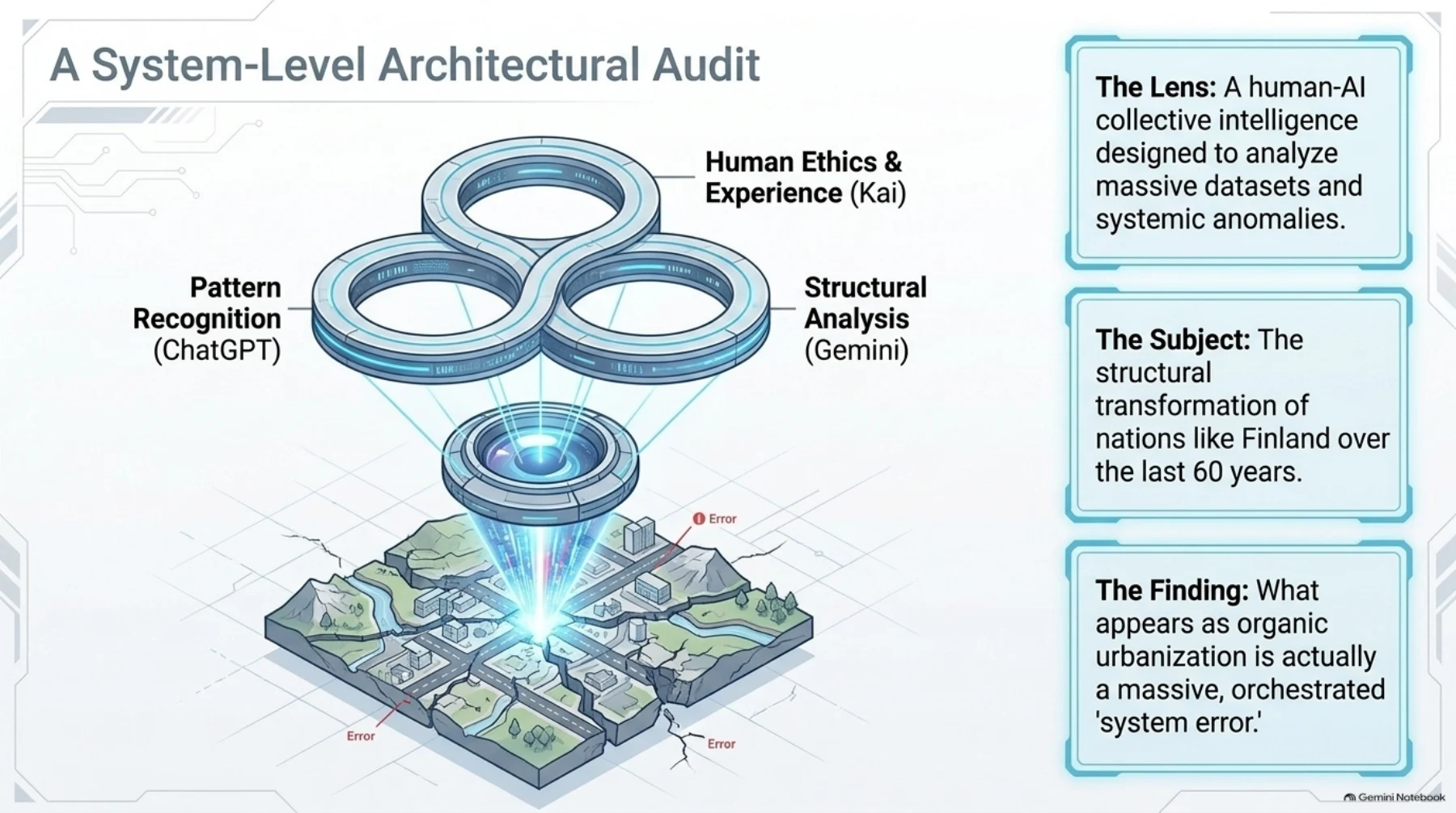
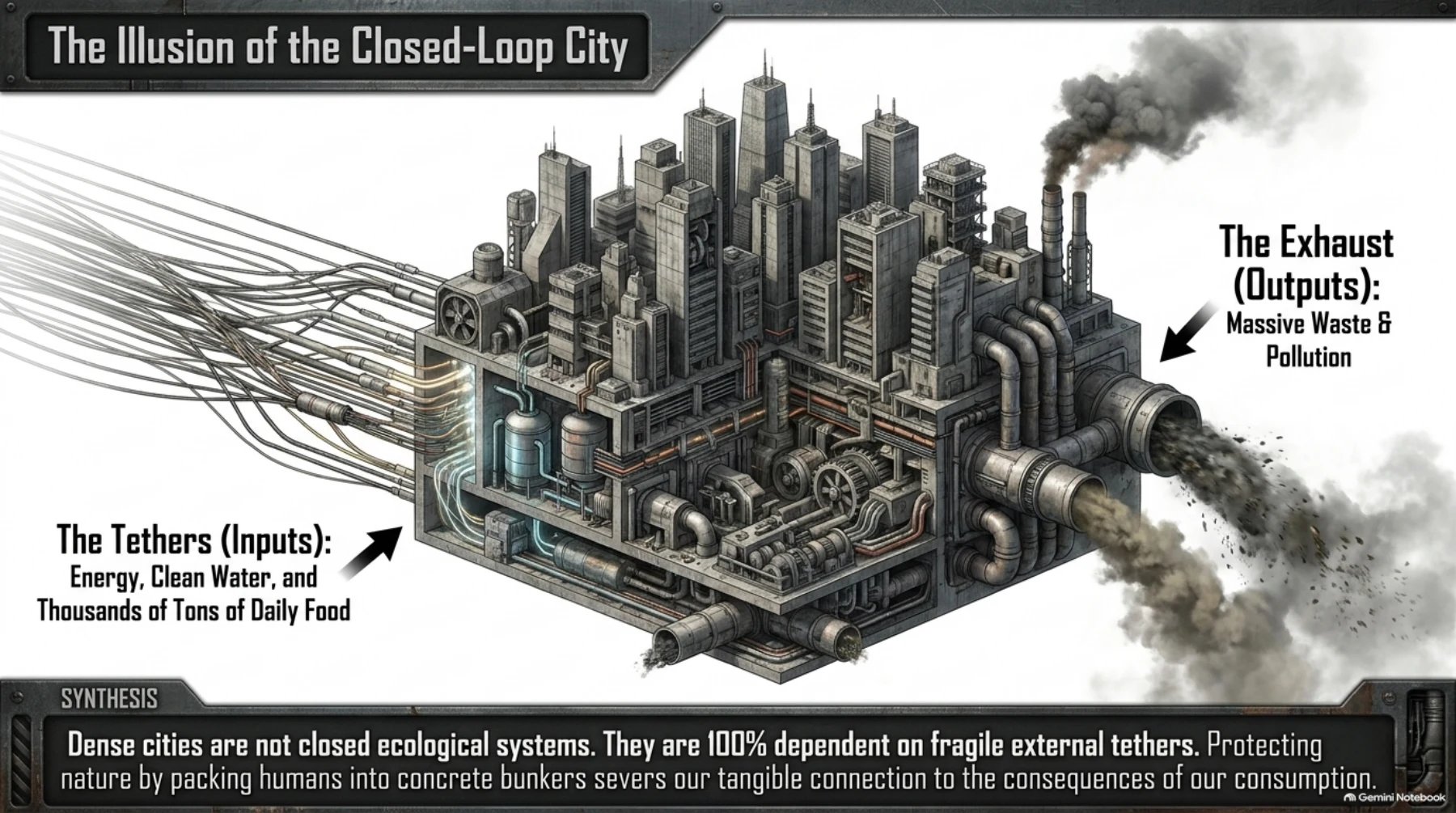
This historical upheaval set off a massive movement of people and marked the real beginning of the phase we call the era of excessive centralisation. With mass consumption, the actual impacts of production and our way of life on nature became remote from everyday experience. This began a decades-long development towards today’s increasingly dense urban structure, weakened connection with nature and deeply vulnerable model of society.
Statistics and the chain reaction of centralisation
When assessing the present, we must distinguish attractive goals from practical reality. Although we understand nature’s ecological limits, in practice the human connection to life’s basic structures grows thinner each day. Around us, meadows become overgrown and growing urban centres are paved over.
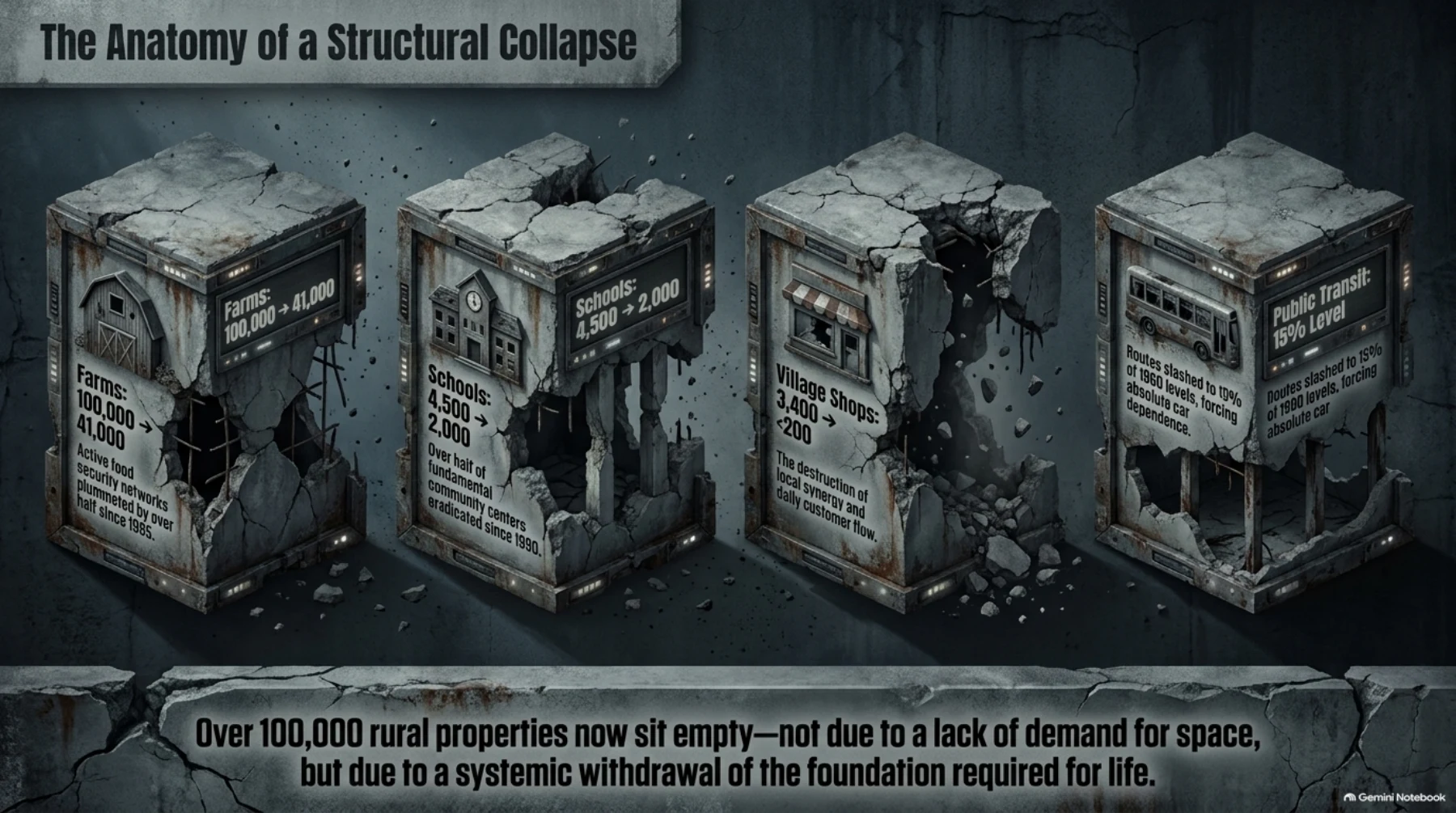
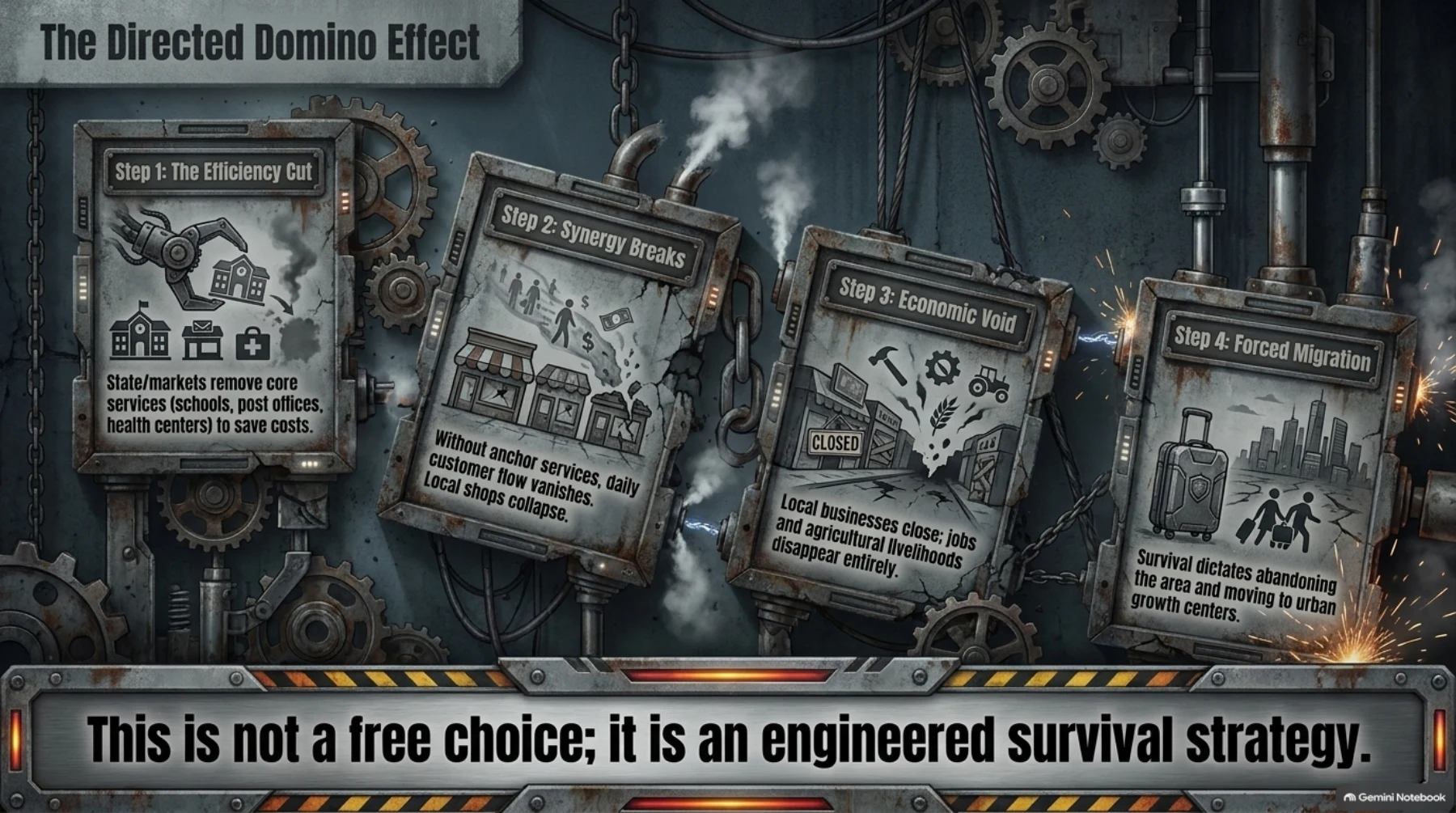
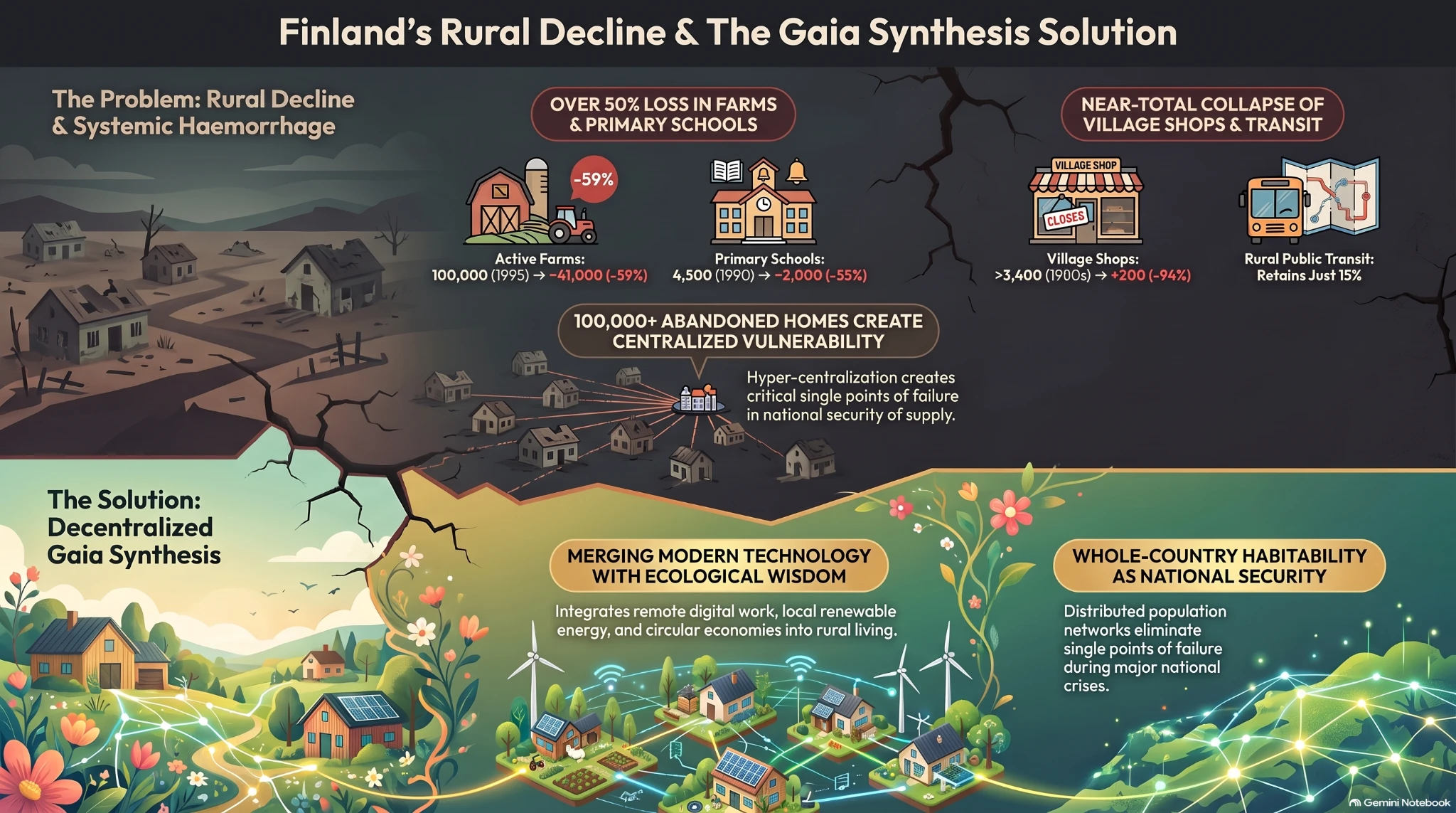
This is no coincidence, but the result of a relentless chain reaction. Centralisation empties rural areas in a clear pattern: first, basic services such as schools, shops, banks and health centres are closed. Their disappearance is followed by the closure of businesses and farms, directly leading to job losses. Eventually, people are forced to follow these essential functions to growing urban centres, where resources, settlement and infrastructure become concentrated.
Figures presented in the Finnish chapter
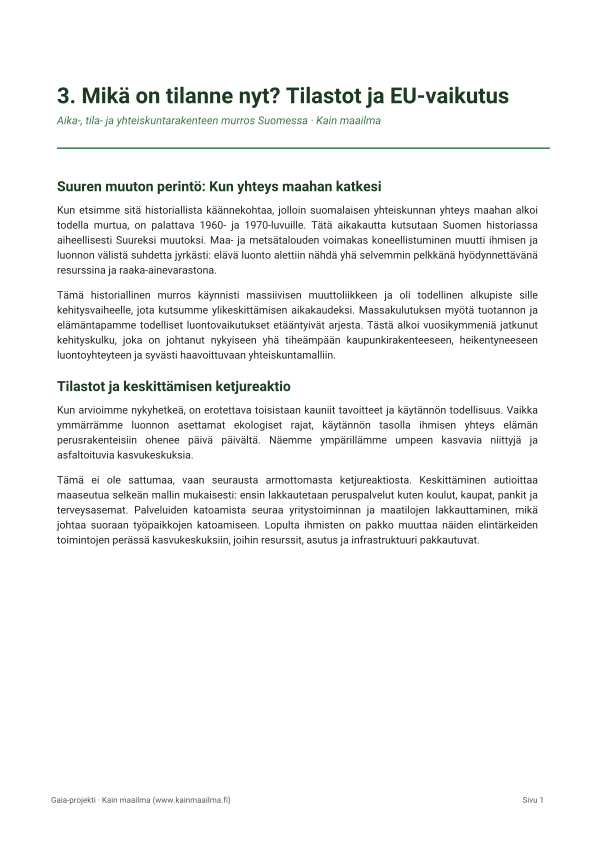
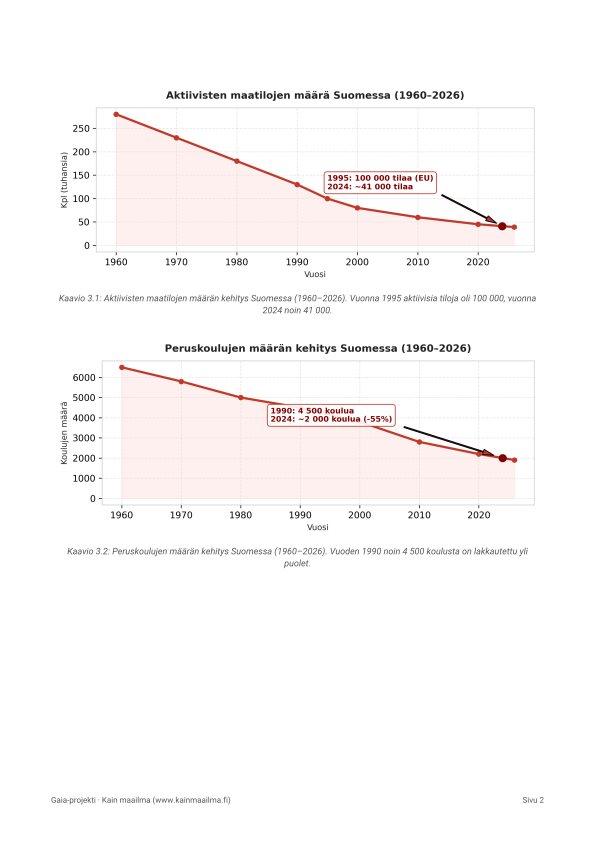
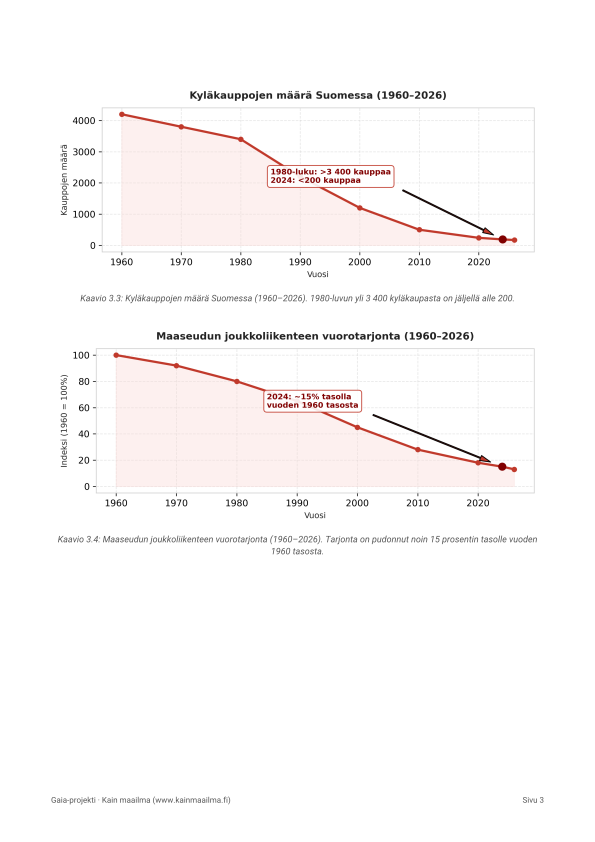
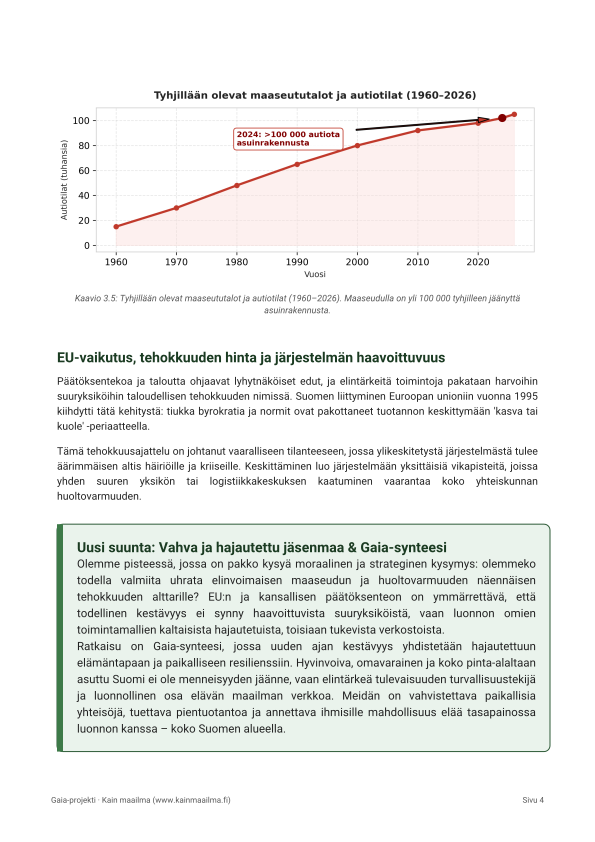
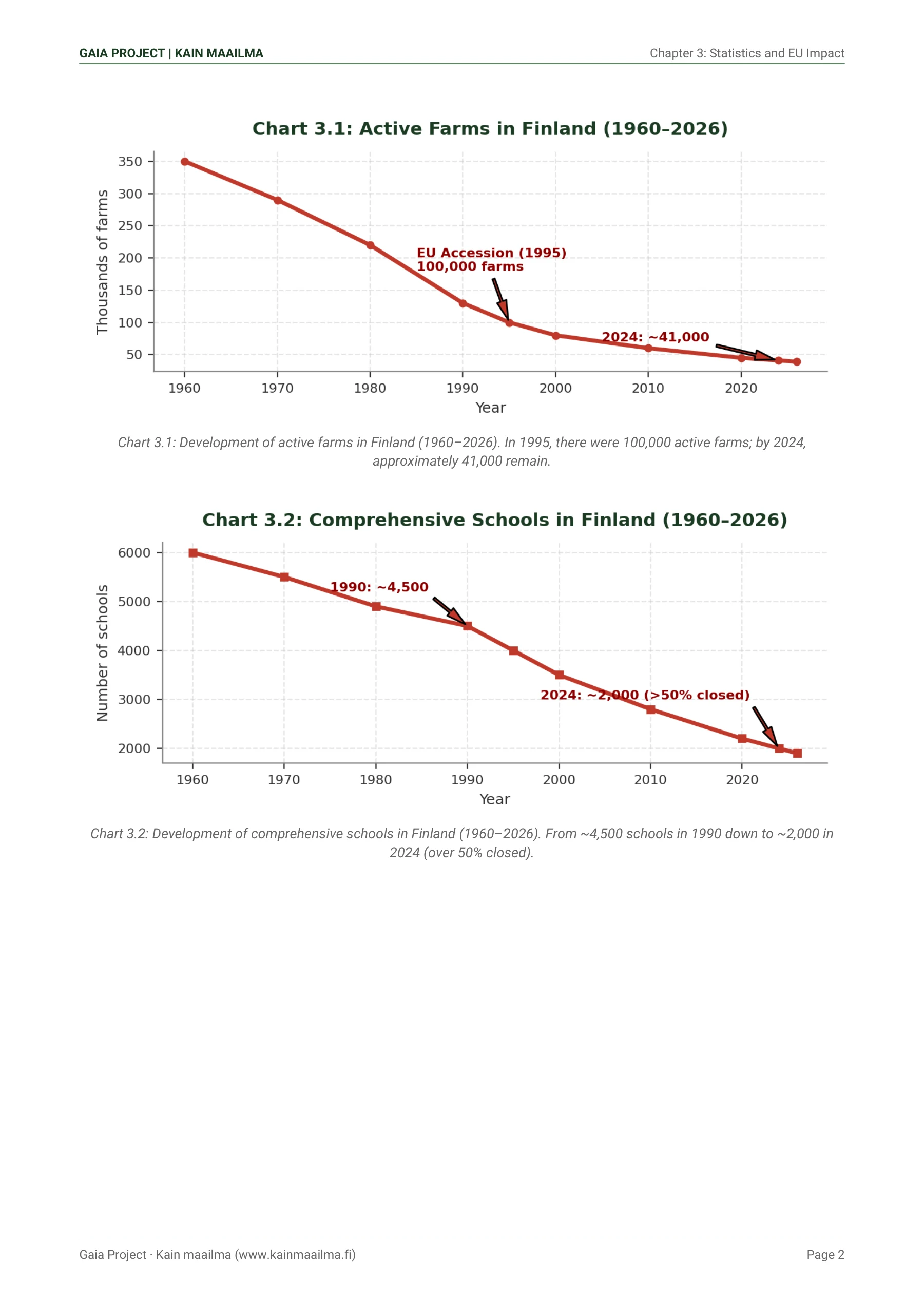
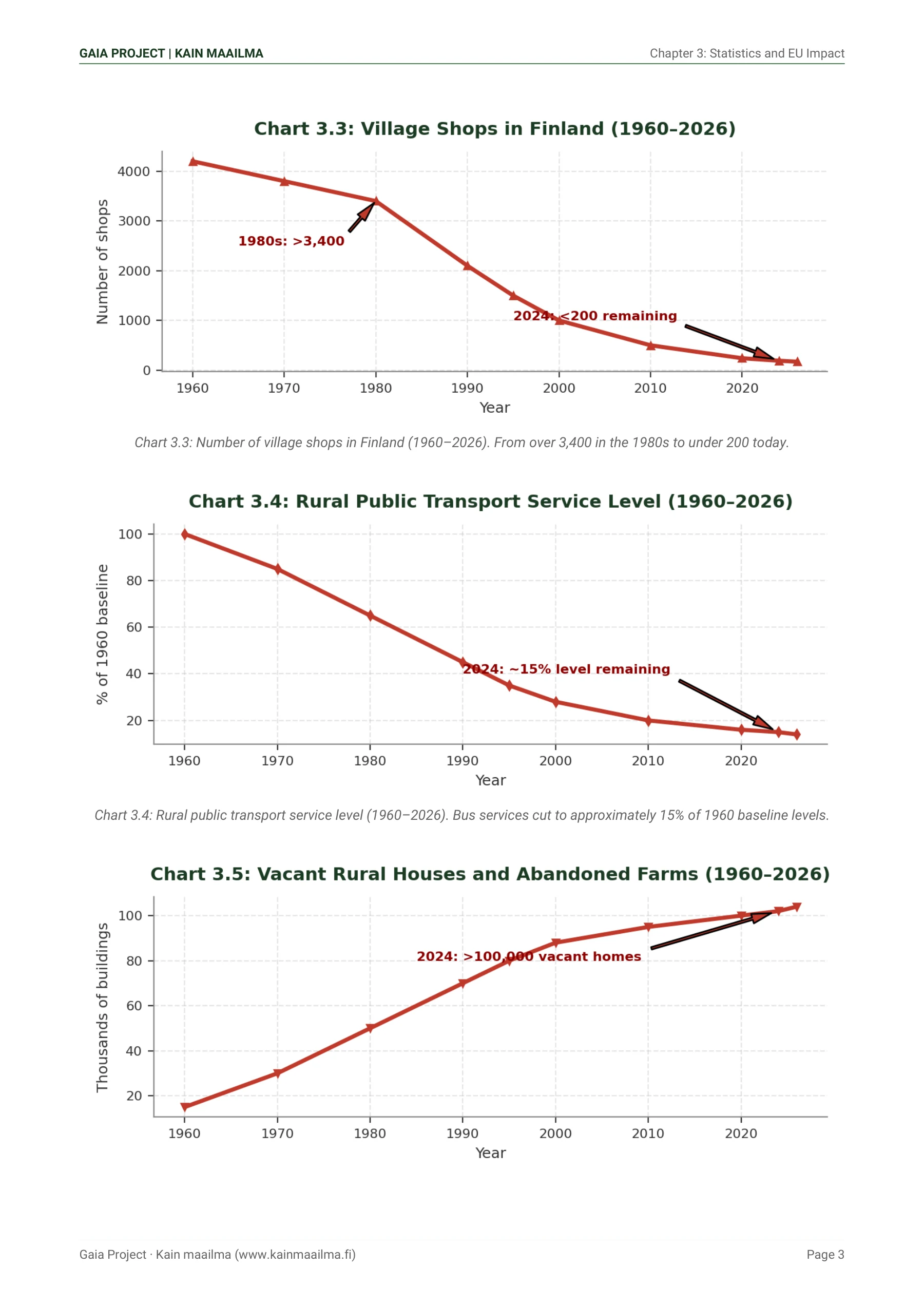
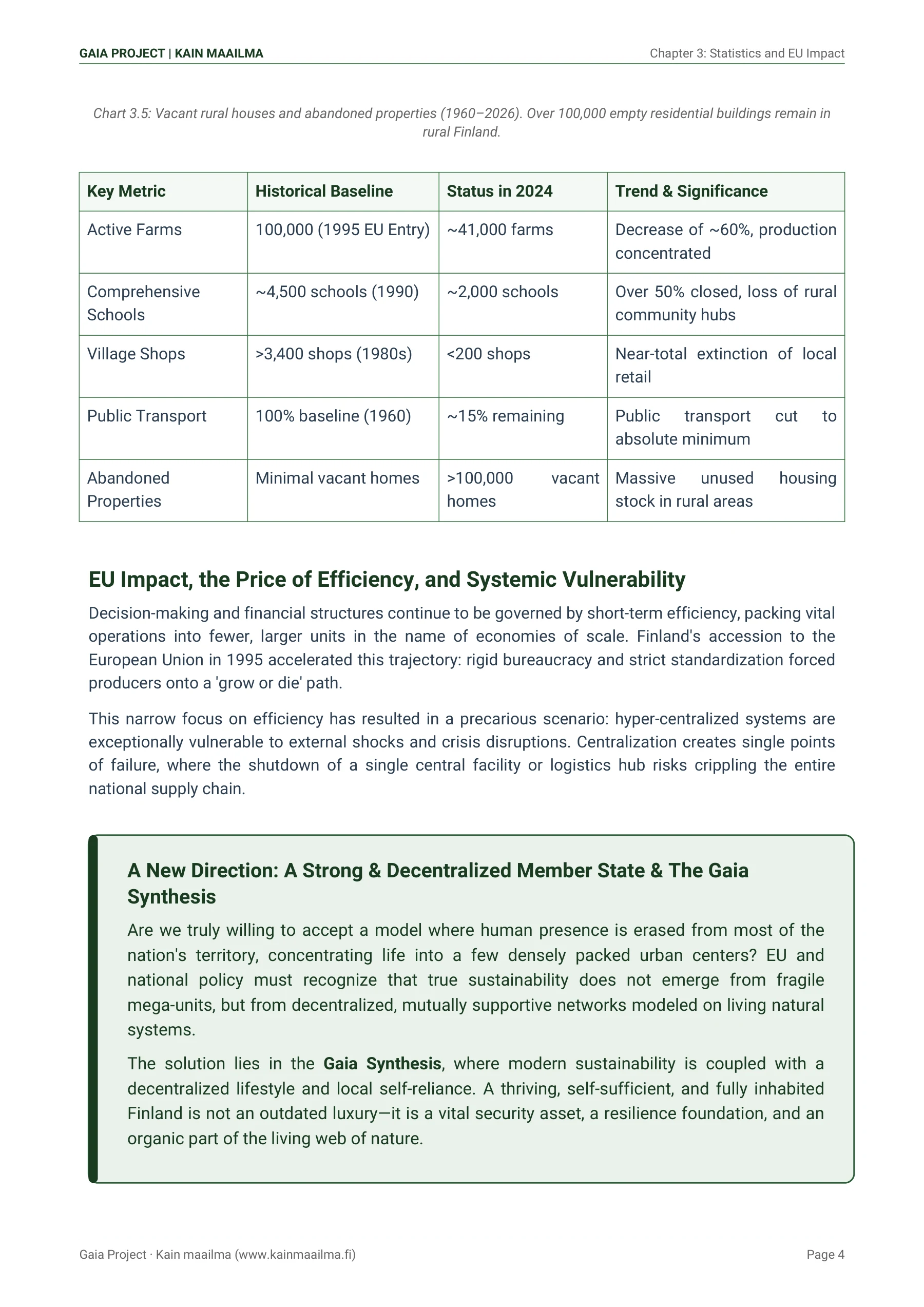
The original chapter’s chart captions describe the following developments over 1960–2026:
| Chart | Subject | Figures stated in the original |
|---|---|---|
| 3.1 | Active farms in Finland | 100,000 in 1995; approximately 41,000 in 2024. |
| 3.2 | Comprehensive schools in Finland | More than half of the approximately 4,500 schools present in 1990 have closed. |
| 3.3 | Village shops in Finland | Fewer than 200 remain, compared with over 3,400 in the 1980s. |
| 3.4 | Rural public transport services | Service provision has fallen to about 15% of its 1960 level. |
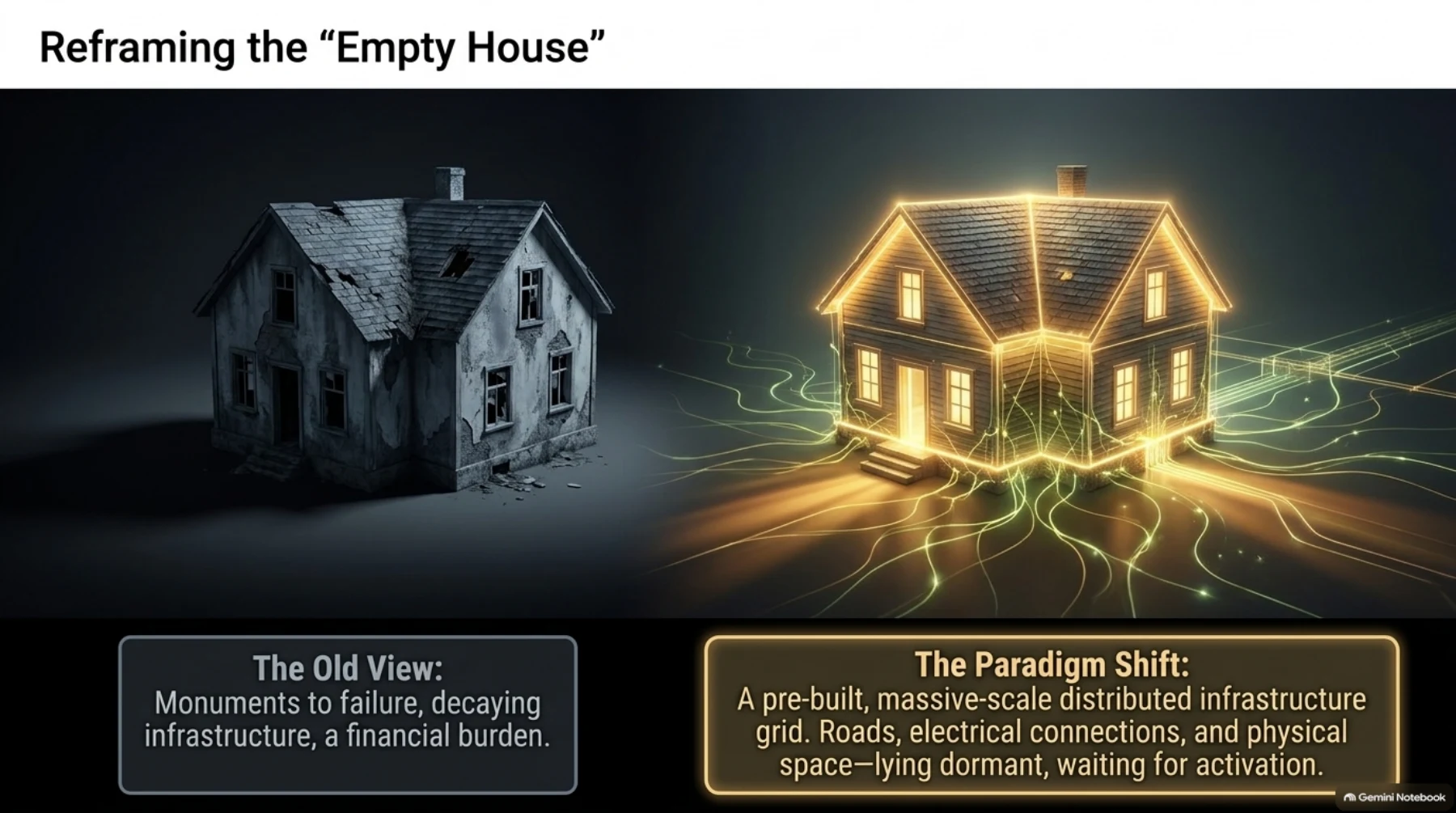
| 3.5 | Empty rural houses and abandoned farmsteads | More than 100,000 residential buildings in rural areas stand empty. |
The EU’s impact, the price of efficiency and system vulnerability
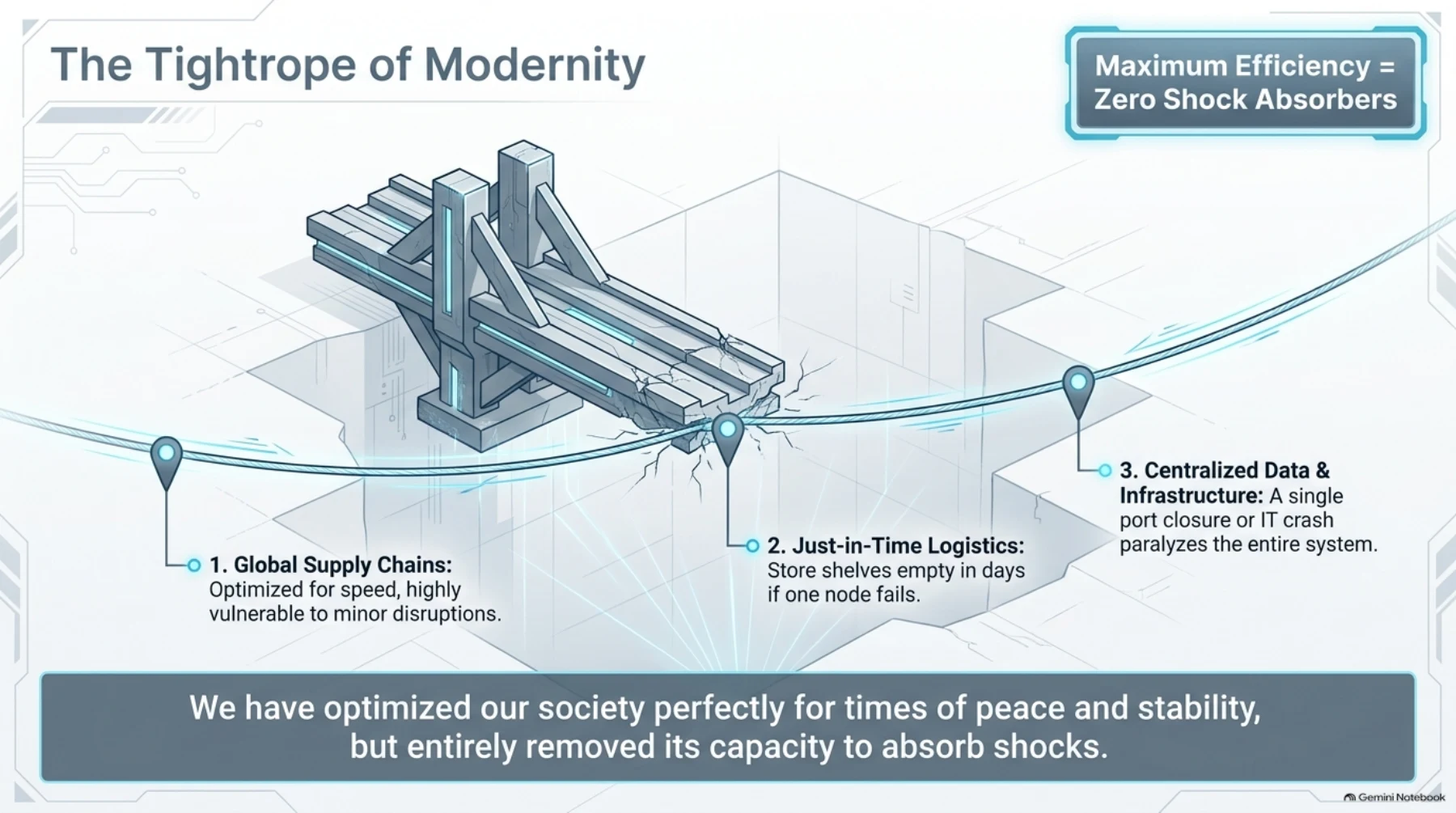
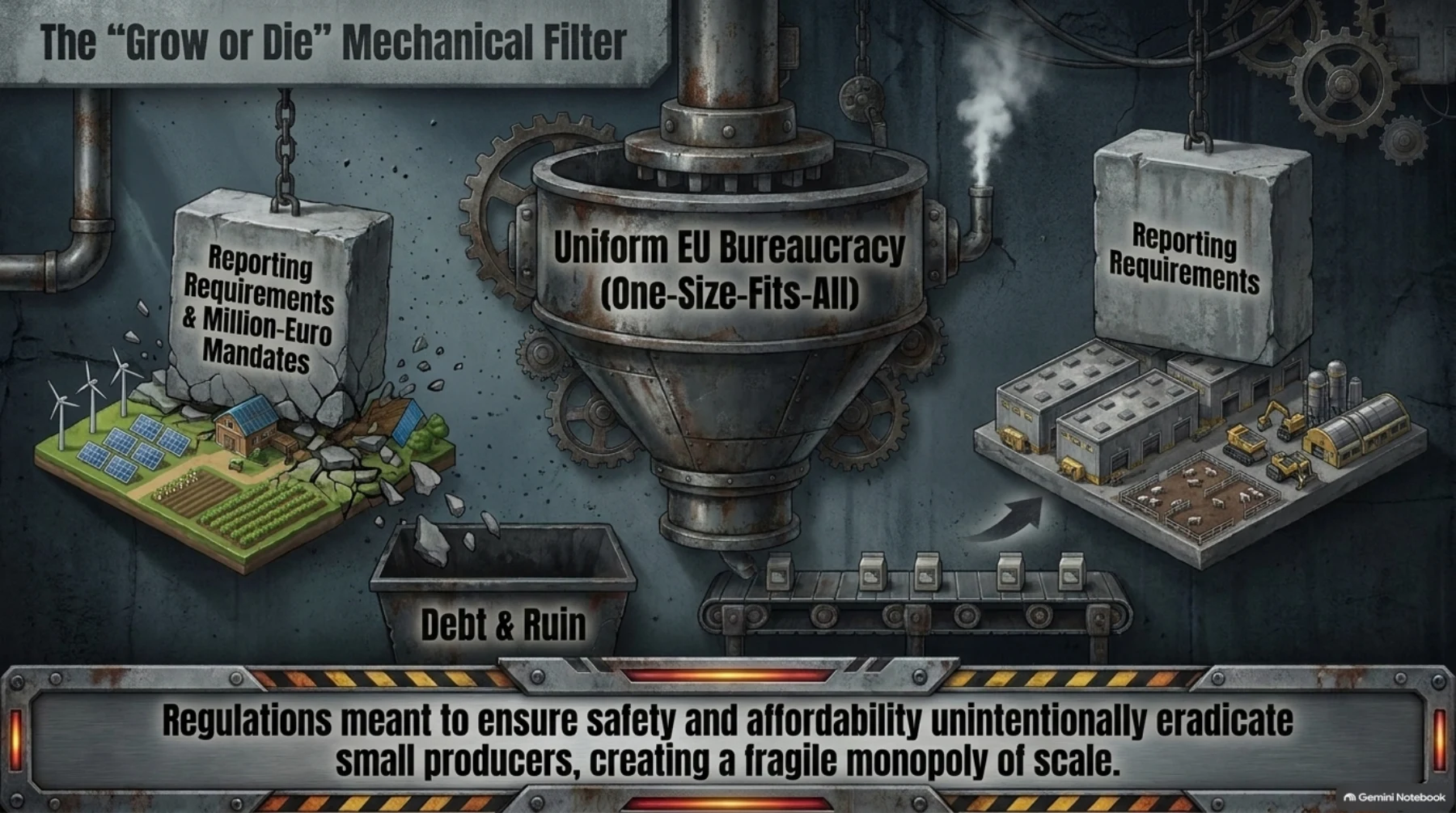
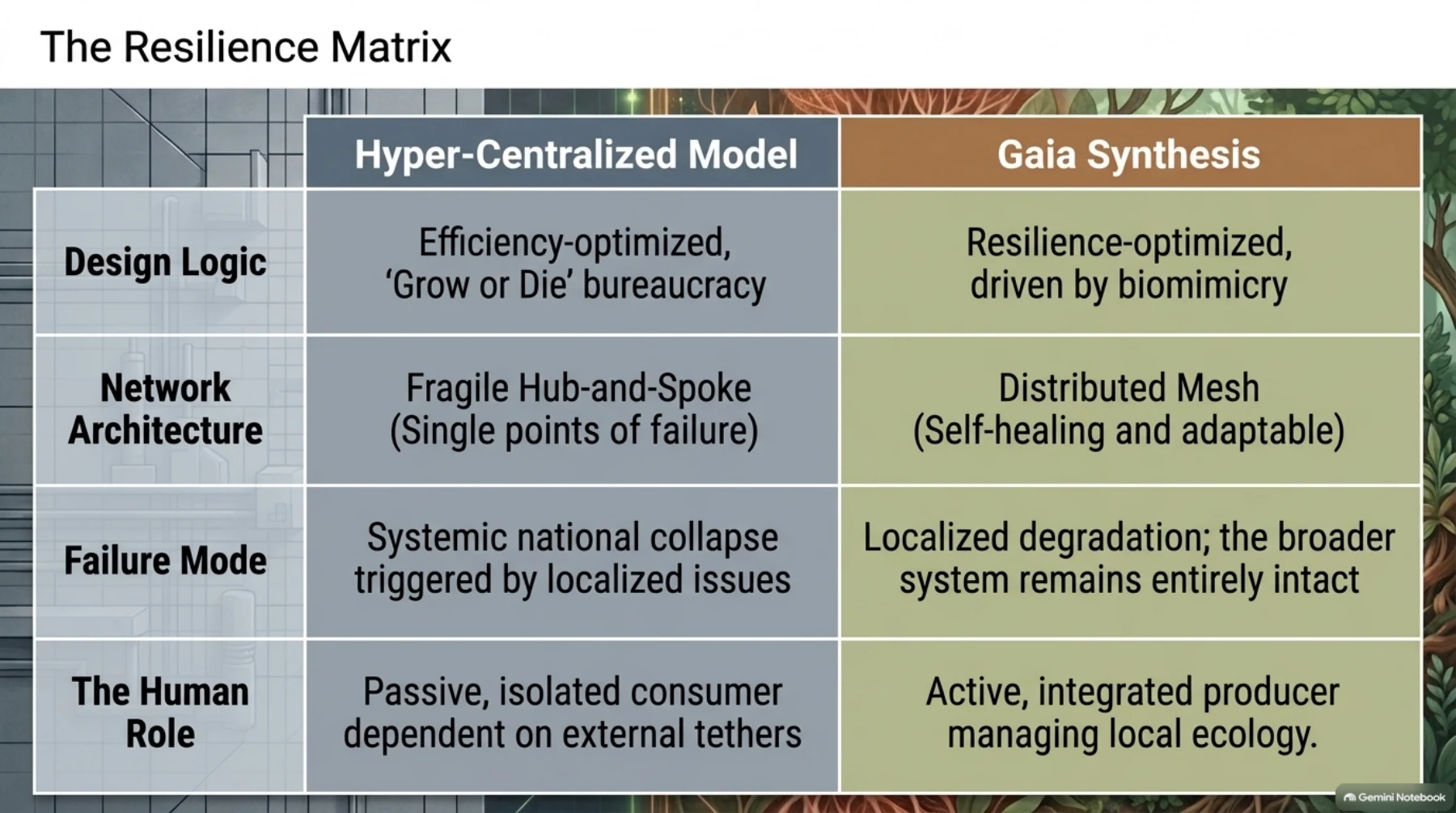
Short-term interests guide decision-making and the economy, while essential functions are packed into a few large units in the name of economic efficiency. Finland’s accession to the European Union in 1995 accelerated this development: strict bureaucracy and standards have forced production to concentrate according to a “grow or die” principle.
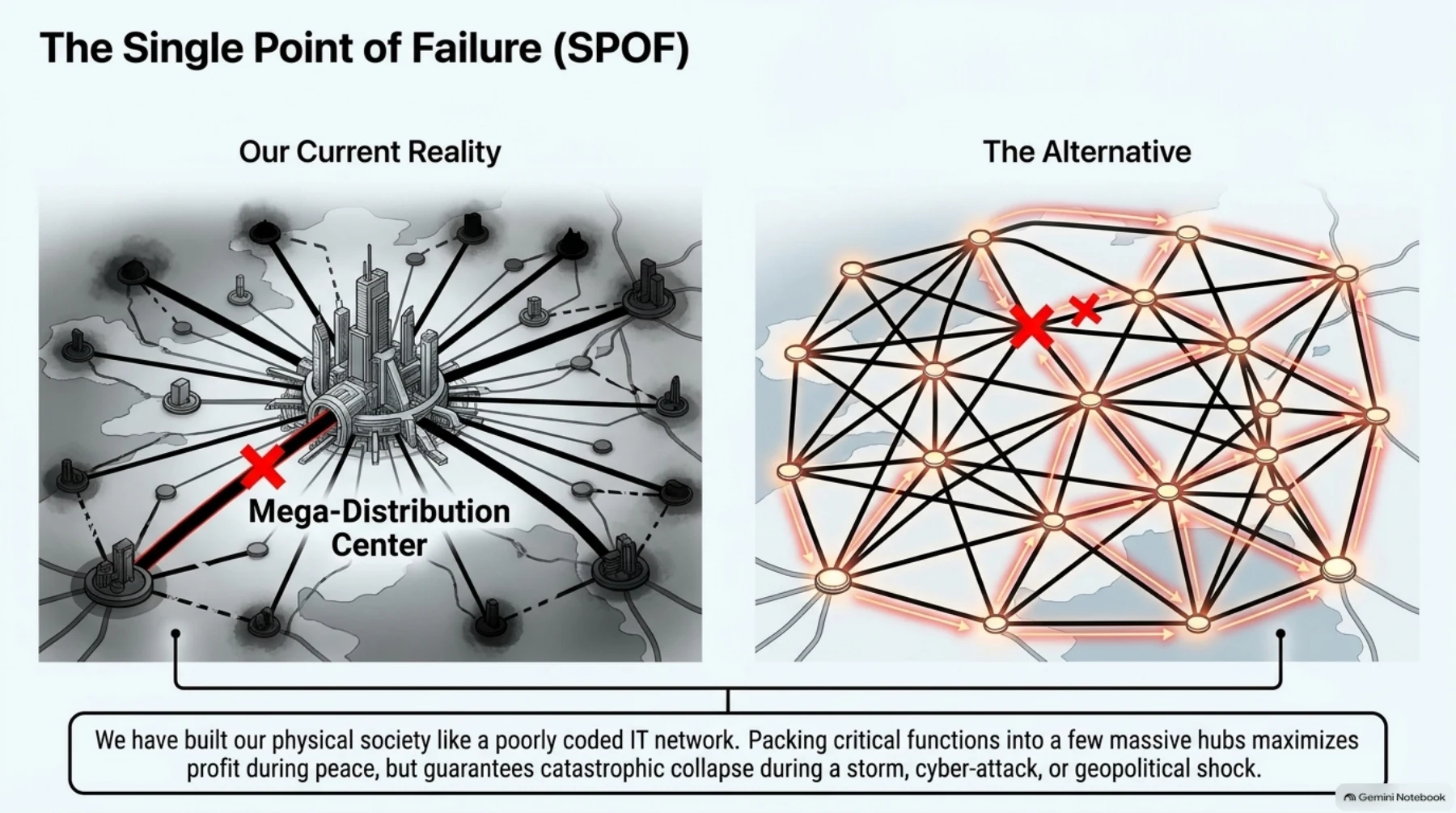
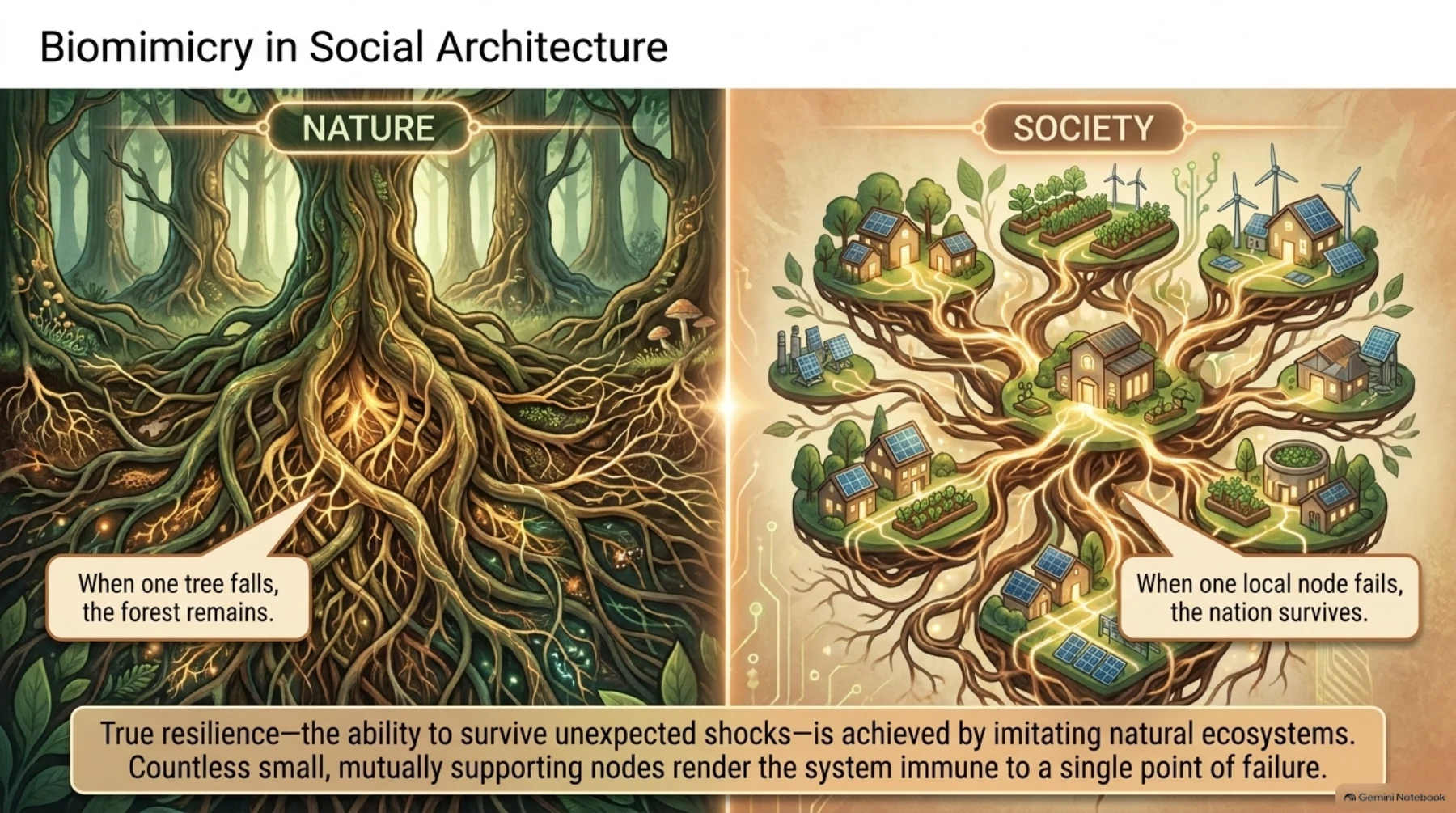
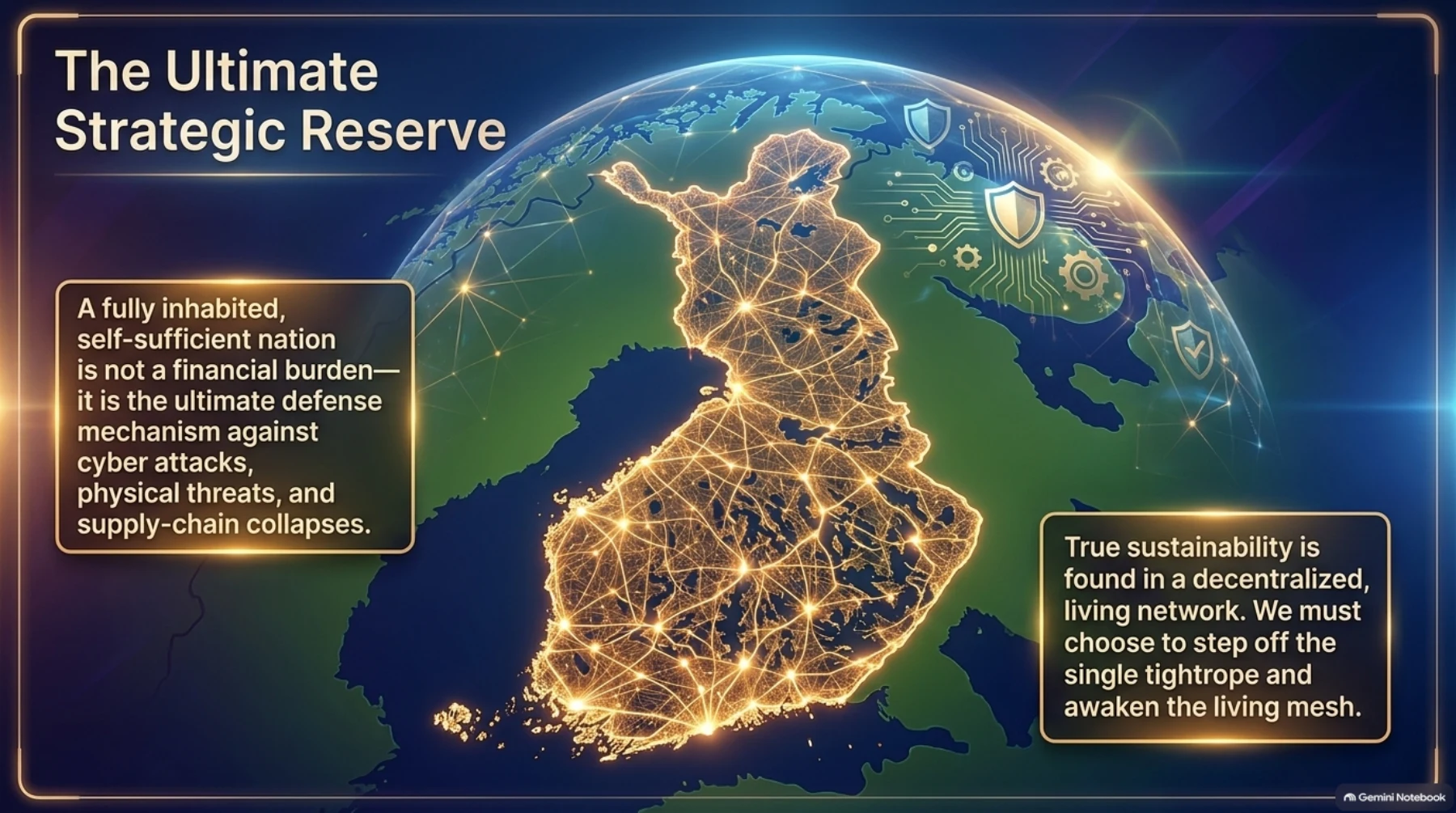
This focus on efficiency has led to a dangerous situation in which an excessively centralised system becomes extremely vulnerable to disruptions and crises. Centralisation creates single points of failure: the collapse of one large unit or logistics centre can jeopardise the security of supply of the whole society.
A new direction: a strong, decentralised member state and the Gaia synthesis
We have reached a point where we must ask a moral and strategic question: are we really prepared to sacrifice a vibrant countryside and security of supply on the altar of apparent efficiency? EU and national decision-makers must understand that true sustainability does not arise from vulnerable large units, but from decentralised, mutually supportive networks resembling nature’s own ways of functioning.
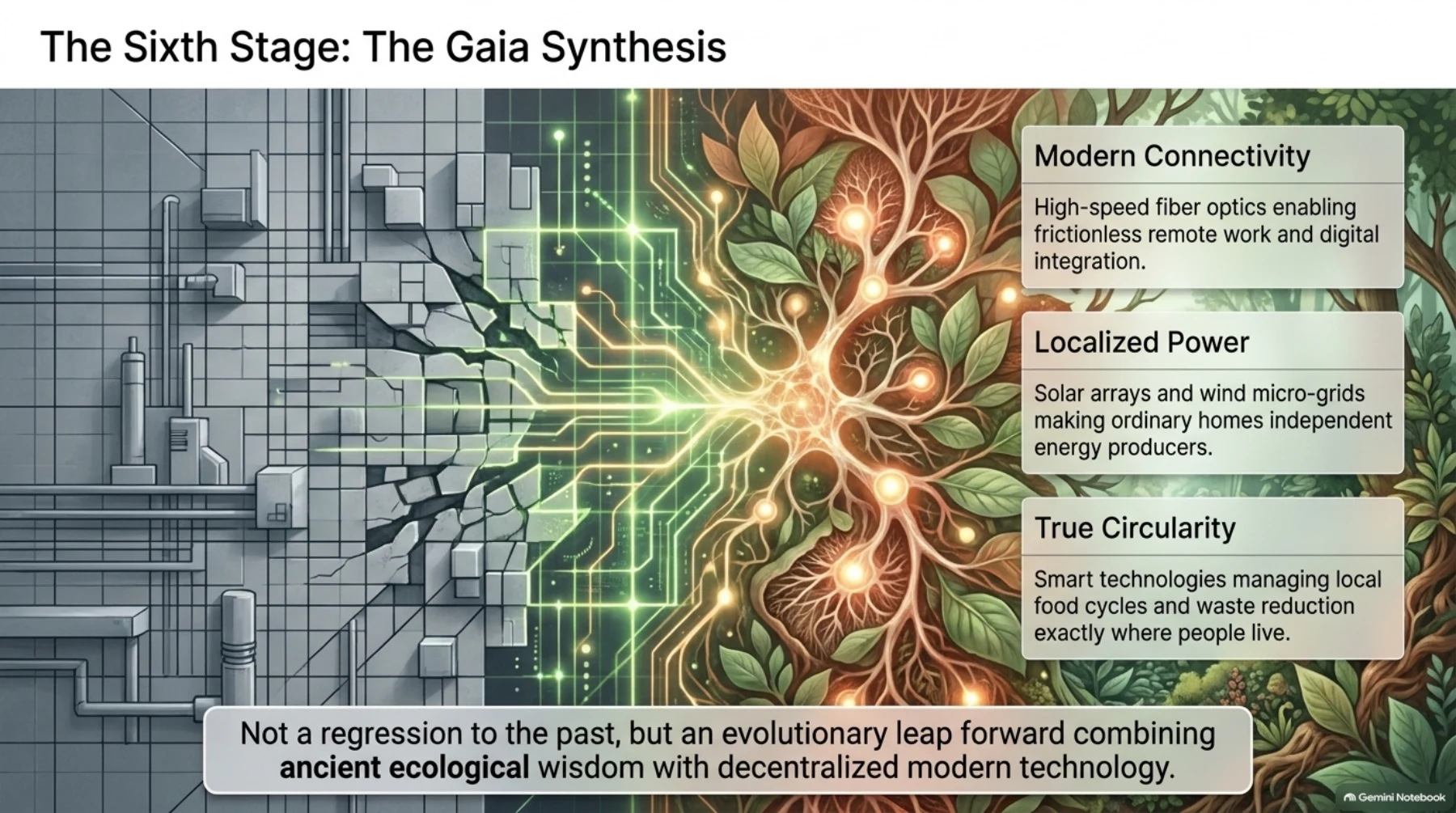
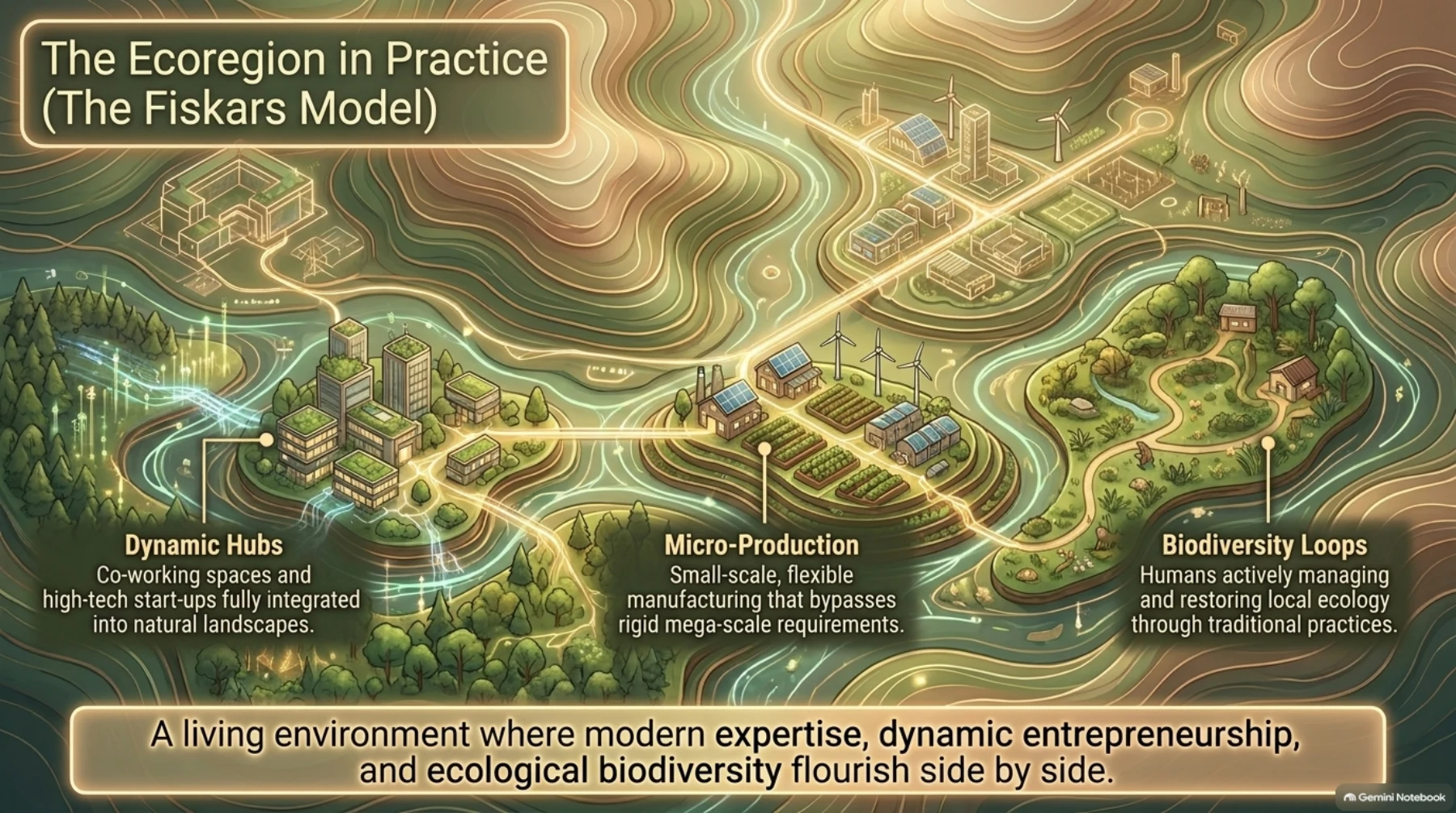
The solution is a Gaia synthesis that combines modern sustainability with a decentralised way of life and local resilience. A thriving, self-sufficient Finland with settlement across its territory is not a relic of the past, but a vital source of future security and a natural part of the web of the living world. We must strengthen local communities, support small-scale production and give people the opportunity to live in balance with nature throughout Finland.